Why Do Teeth Turn Yellow?
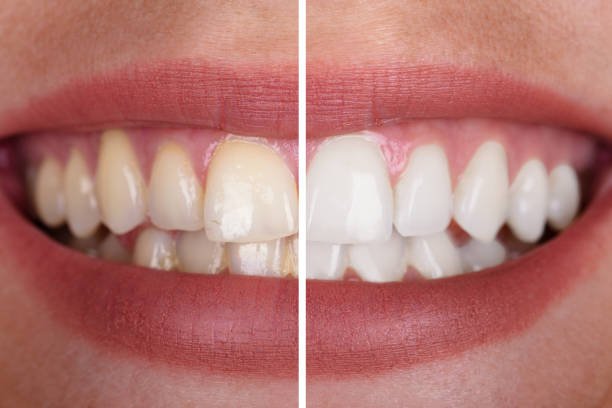
Teeth turn yellow primarily due to two distinct factors: surface stains and internal structural changes. Extrinsic staining occurs when color-rich pigments from foods, drinks, and lifestyle habits accumulate on the outer enamel layer. Intrinsic yellowing happens when the protective enamel thins over time, exposing the dentin beneath, which naturally possesses a deeper yellow hue.
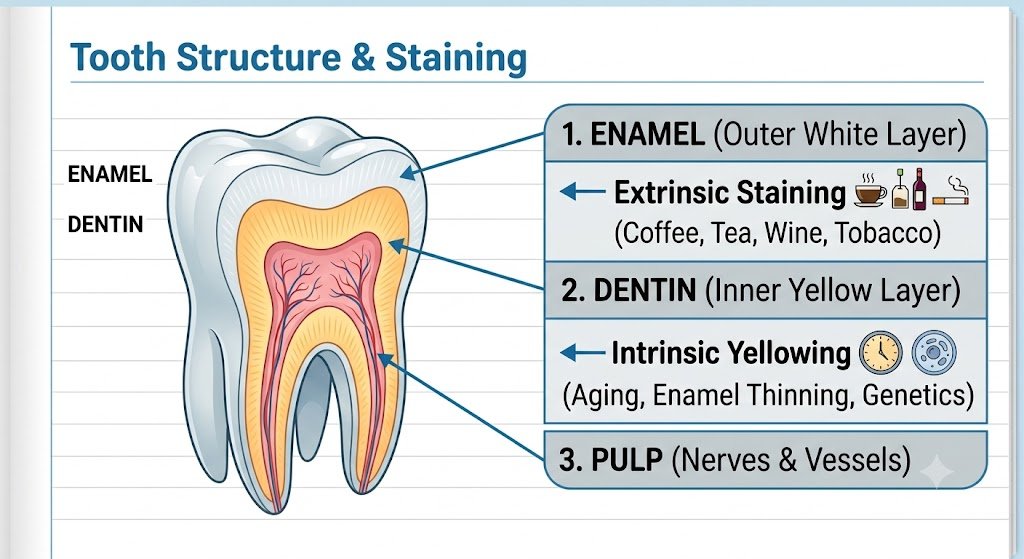
Surface stains: bad oral hygiene, bad dietary habits, tobacco use, etc.
Internal structural changes: age, genetics, dental trauma, medication or medical treatments, etc.
To reduce stains and enhance the glow, these are what you can do:
Daily Oral Hygiene and Habit Adjustments
The first line of defense against yellow stains begins at home with consistent oral hygiene.
- Brushing twice daily with a fluoride toothpaste and flossing once daily removes sticky plaque before it hardens into tartar.
- Rinse your mouth with water immediately after drinking dark-colored beverages, such as coffee, tea, or red wine.
- Quit tobacco products because tobacco stains penetrate deeply into enamel crevices.
Over-the-Counter Whitening Products
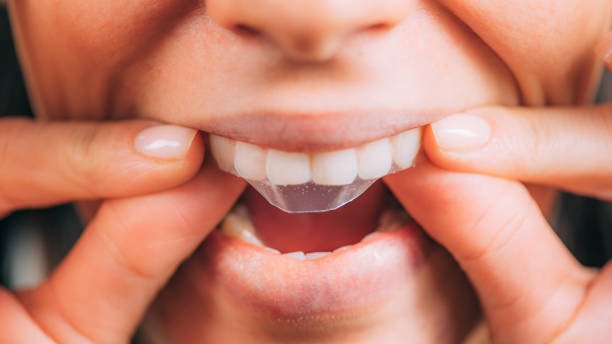
For reduction of yellow hue without a clinical procedure, over-the-counter (OTC) whitening products offer an accessible option. These products typically rely on low concentrations of hydrogen peroxide or carbamide peroxide to break down organic stains. With consistent use according to product guidelines, they can lighten teeth by several shades.
- Whitening Strips: Flexible plastic strips coated with peroxide gel adhere directly to the front teeth. They provide consistent contact and yield noticeable results within a few days to two weeks.
- Whitening Toothpastes: These formulations utilize mild abrasives and chemical agents to polish away surface stains during routine brushing. They do not alter intrinsic color, but they excel at preventing new surface build-up.
- Whitening LED Kits: Modern home kits pair gel-filled trays with light units intended to accelerate peroxide breakdown. They offer a convenient mid-tier option between basic strips and clinical treatments.
- Whitening Rinses: Mouthwashes containing peroxide provide a quick daily refresh, though short contact time means results develop much more gradually.
While OTC options are convenient, they require careful application to prevent tooth sensitivity and gum irritation. Overusing peroxide gels or brushing aggressively with abrasive whitening pastes can wear down enamel, unintentionally exposing more yellow dentin underneath. Always follow product directions carefully and pause treatment if sensitivity arises.
In-Office Professional Dental Solutions
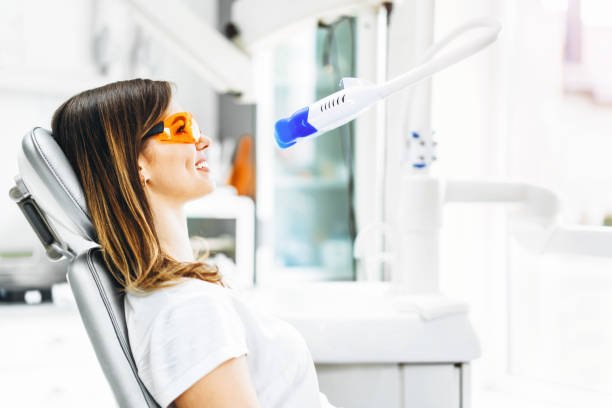
When surface treatments fall short, professional dental care offers powerful, long-lasting solutions. In-office whitening treatments utilize high-concentration peroxide agents activated by specialized light technology. These clinical applications penetrate deep into the enamel to lift stubborn intrinsic stains safely in a single visit.
Clinical Tip: For deep intrinsic staining caused by trauma, old fillings, or medications, traditional bleaching agents may not yield full results. In these cases, cosmetic restorations provide a reliable solution.
For permanent cosmetic adjustments, dental bonding, porcelain veneers, and crowns offer exceptional coverage. Composite bonding involves applying a tooth-colored resin directly to the tooth to reshape and lighten its appearance. Porcelain veneers and custom crowns cover the front surface or whole tooth structure, masking severe discoloration permanently while providing custom shade matching.
Beyond Yellow: What Other Tooth Discolorations Mean
Teeth can display colors other than yellow, each signaling different underlying causes that require attention.
| Color | Common Causes | Clinical Significance |
| White Spots | Fluorosis, early enamel demineralization, bracket marks | Early sign of enamel weakness or excess fluoride exposure during development. |
| Grey or Blue | Internal nerve trauma, tetracycline exposure, old amalgam | Often indicates damage to internal pulp tissue or deep intrinsic medication staining. |
| Black or Dark Brown | Advanced tooth decay, severe tartar build-up, metallic stains | Frequently points to active cavities or hardened calculus requiring prompt care. |